| Cartan's Corner |
|
| Cartan's Corner |
|
|
A Thermodynamic Explanation of why electrons in a Bohr orbit do not radiate.
Turbulence and the Navier Stokes Equations
The concept of Continuous Topological Evolution, based upon Cartan’s methods
of exterior differential systems, is used to develop a topological theory of
non-equilibrium thermodynamics, within which there exist processes that exhibit
continuous topological change and thermodynamic irreversibility. The technique
furnishes a universal, topological foundation for the partial differential
equations of hydrodynamics and electrodynamics; the topological technique does
not depend upon a metric, connection or a variational principle. Certain
topological classes of solutions to the Navier-Stokes equations are shown to be
equivalent to thermodynamically irreversible processes. The method demonstrates,
by example, how an irreversible dissipative process acting in an Open
non-equilibrium system of Pfaff topological dimension 4 can decay, or create in
finite time, topological defect structures, or Closed systems of Pfaff
topological dimension 3. These Closed non-equilibrium systems admit a
Hamiltonian process which can emulate the geometrical evolution of topological
stationary states far from equilibrium. The theory of Continuous Topological
Evolution gives formal credence, as well as analytic examples, to the Prigogine
conjecture of self-organization in terms of disspative (thermo)dynamics (written
in response to the Clay Institute millenium challenge).
Prigogine'a Thermodynamic Emergence and Continuous Topological Evolution
Irreversible processes can be described in Open non-equilibriumthermodynamic
systems, of topological dimension 4. By means of Continuous Topological
evolution, such processes can cause local decay to Closed non-equilibrium
thermodynamic states, of topological dimension 3. These topologically coherent,
perhaps deformable, regions or states of one or more components appear to
"emerge" as compact 3D Contact submanifolds that can be defined as topological
defects in the 4D Symplectic manifold. These emergent states are still far from
equilibrium, as their topological (not geometrical) dimension is greater than 2.
The 3D Contact submanifold admits evolutionary processes with a unique extremal
Hamiltonian vector component, as well as fluctuation spinor components. If the
subsequent evolution is dominated by the Hamiltonian component, the emergent
topological defects will maintain a relatively long-lived, topologically
coherent, approximately non-dissipative structure. These topologically coherent,
"stationary states" far from equilibrium ultimately will decay, but only after a
substantial "lifetime". Analytic solutions and examples of these processes of
Continuous Topological Evolution give credence, and a deeper understanding, to
the general theory of self-organized states far from equilibrium, as conjectured
by I. Prigogine. Moreover, in an applied sense, universal engineering design
criteria can be developed to minimize irreversible dissipation and to improve
system efficiency in general non-equilibrium situations. As the methods are
based on universal topological, not geometrical, ideas, the general
thermodynamic results apply to all synergetic topological systems. It may come
as a surprise, but ecological applications of thermodynamics need not be limited
to the design of specific hardware devices, but apply to all synergetic systems,
be they mechanical, biological, economical or political. (submitted for
consideration of the WTI Prigogine award)
The powerpoint presentations of a talk, "Non-linear, Topologically Coherent, and Compact Flows Far from Equilibrium" given at the EGU 2007 conference are made available for those interested.
The fundamental idea is that topological thermodynamics predicts the production
of topological defect structures
The Pfaff Topological dimension 3 subdomains are thermodynamic systems that are
far from equilibrium,
Vienna EGU
April 20, 2007 "Part1"
Topological Torsion, Negative Pressure and the Internal Energy
of a Non-equilibrium Fluid in 4D
The thermodynamic Internal Energy of a closed, non-equilibrium, rotating fluid
or gas can have a classical component related to potential energy and a
non-classical component related to the spiral helicity density,
(v,curl v), of the gas dynamics. The existence of non-zero helicity density
is a topological property (of topological, not affine, torsion)
not found in isolated equilibrium thermodynamic systems.
Experimental Evidence indicates that Physical 3D space is not necessarily
Euclidean
Conventional physical dogma, justified by the local success of Newtonian
dynamics for particles, assigns a Euclidean metric with signature (plus, plus,
plus) to the three spatial dimensions. However, experimental evidence now
indicates that the intransitive, non-affine, (rotational) dynamics of a fluid
admits a better description in terms of a 3 dimensional space with a Lorentz
metric of signature (plus, plus, minus), or a Majorana metric of signature
(minus, minus, plus). Three dimensional spaces with such non-Euclidean metric
signatures admit what mathematicians have described as maximal surfaces of zero
mean curvature, with conical or isolated singularities. The zero mean curvature
surfaces in Majorana space have negative Gauss curvature (similar to minimal
surfaces in Euclidean space), while the zero mean curvature surfaces in Lorentz
space have a positive Gauss curvature (in contrast to minimal surfaces in
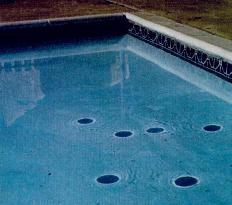
Euclidean space). Falaco Solitons, easily created as topological defects in a
swimming pool, are claimed to be experimental artifacts of zero mean curvatures
surfaces immersed into 3D spaces of non-Euclidean metric. The topological
defects, in the otherwise flat surface of fluid density discontinuity, appear as
a pair of zero mean curvature surfaces, with a conical (dimple) singularity at
each end. The two conical singularities of the Falaco Soliton pair appear to be
connected with a 1D topological defect, or string under tension. The singular
conical points are associated with rotation (not translation) about a rotational
axis or "a fixed point", and are not mapped globally by affine transitive
transformations. In particular, the metric signature of 3D space with matter,
and its resultant dynamics, need not be Euclidean. These surfaces of zero mean
curvature, which are dominated by rotation, are generated by macroscopic
spinors.
A Topological Theory of the Physical Vacuum
This article examines how the physical presence of field energy and particulate
matter could influence the topological properties of space time. The theory is
developed in terms of vector and matrix equations of exterior differential
forms. The topological features and the dynamics of such exterior differential
systems are studied with respect to processes of continuous topological
evolution. The theory starts from the sole postulate that field properties of a
Physical Vacuum (a continuum) can be defined in terms of a vector space domain,
of maximal rank, infinitesimal neighborhoods, that supports a Basis Frame as a 4
x 4 matrix of C2 functions with non-zero determinant. The basis vectors of such
Basis Frames exhibit differential closure. The particle properties of the
Physical Vacuum are defined in terms of topological defects (or compliments) of
the field vector space defined by those points where the maximal rank, or
non-zero determinant, condition fails. The topological universality of a Basis
Frame over infinitesimal neighborhoods can be refined by particular choices of a
subgroup structure of the Basis Frame, [B]. It is remarkable that from such a
universal definition of a Physical Vacuum, specializations permit the deduction
of the field structures of all four forces, from gravity fields to Yang Mills
fields, and associate the origin of topological charge and topological spin to
the Affine torsion coefficients of the induced Cartan Connection matrix [C] of
1-forms. gr-qc/0602118
The topological perspective of thermodynamics defines the 1-form of Work as the
interior product of the process direction field V with the antisymmetric 2-form
F = dA generated by the exterior derivative of the 1-form of Action, A, used to
define the physical system. The eigenvectors of the 2-form are either vectors
of eigenvalue zero, or isotropic complex Spinors (E. Cartan) of imaginary
eigenvalues. If the process is such that the Work 1-form vanishes, then the
evolution is Hamiltonian, conservative, and composed of eigenvectors of zero
eigenvalue. If the 1-form of Work is not zero, then the process must contain
spinor components. It follows that topological fluctuations in kinematics are
generated by processes that have spinor components.
coslab
Falaco Solitons as Cosmic Strings in a swimming pool. (COSLAB - Bilbao, Spain,
2003)
Vigier3
Cosmology as a turbulent non equilibrium van der Waals gas near its critical
point. (Vigier III Conference - Paris 2003) Euromech448 Falaco Solitons in a stratified Fluid (Euromech 448 - Paris 2004)
AMS_ABQ
Non Equilibrium Thermodynamics - from the perspective of Continuous Topological
Evolution. (AMS meeting - Albuquerque USA 2004)
AVI
A movie (14 MB) demonstrating the creation and evolution of the topological
defects known as the Falaco Soliton. (Mazan, France 2004)
More detail can be found in the POD books referenced above
Finally, a new bifurcation mechanism explains the creation of Falaco
Solitons.
Cosmology from the point of view of non-equilibrium thermodynamics.
Yet could it be that there is a much simpler model that could
account for the various "features" of the "new" Universe? In this
article the idea is presented that the universe is a non-equilibrium
thermodynamic system with topological features of a universal van der
Waals gas.
The turbulent non-equilibrium thermodynamic cosmology of a real
gas near its critical point yields an explanation for:
1.The granularity of the night sky as exhibited by stars and galaxies.
2.The Newtonian law of gravitational attraction proportional to 1/r².
3.The expansion and irreversible dissipation of the universe (4th order
curvature effects).
All of the above are deduced without explicit mention of the geometric
features of metric or connection!!"
Get the free Adobe 5.0 pdf file reader WARNNG: Adobe Reader 5.0 has symbol problems that are not in Adobe Reader 4.0 and 3.0. PDF files created with older versions of Adobe Acrobat do not necessarily display properly when using Adobe Reader 5.0 (they do display properly using Adobe Reader 4.0). The pdf files on Cartan's corner are gradually being recompiled to work with all versions of the Adobe reader. Please advise me by email of those pdf files that display improperly
|
| Topological Torsion Picture Catalogue | . |

Links2Go award for (Differential) Geometry |

|
